
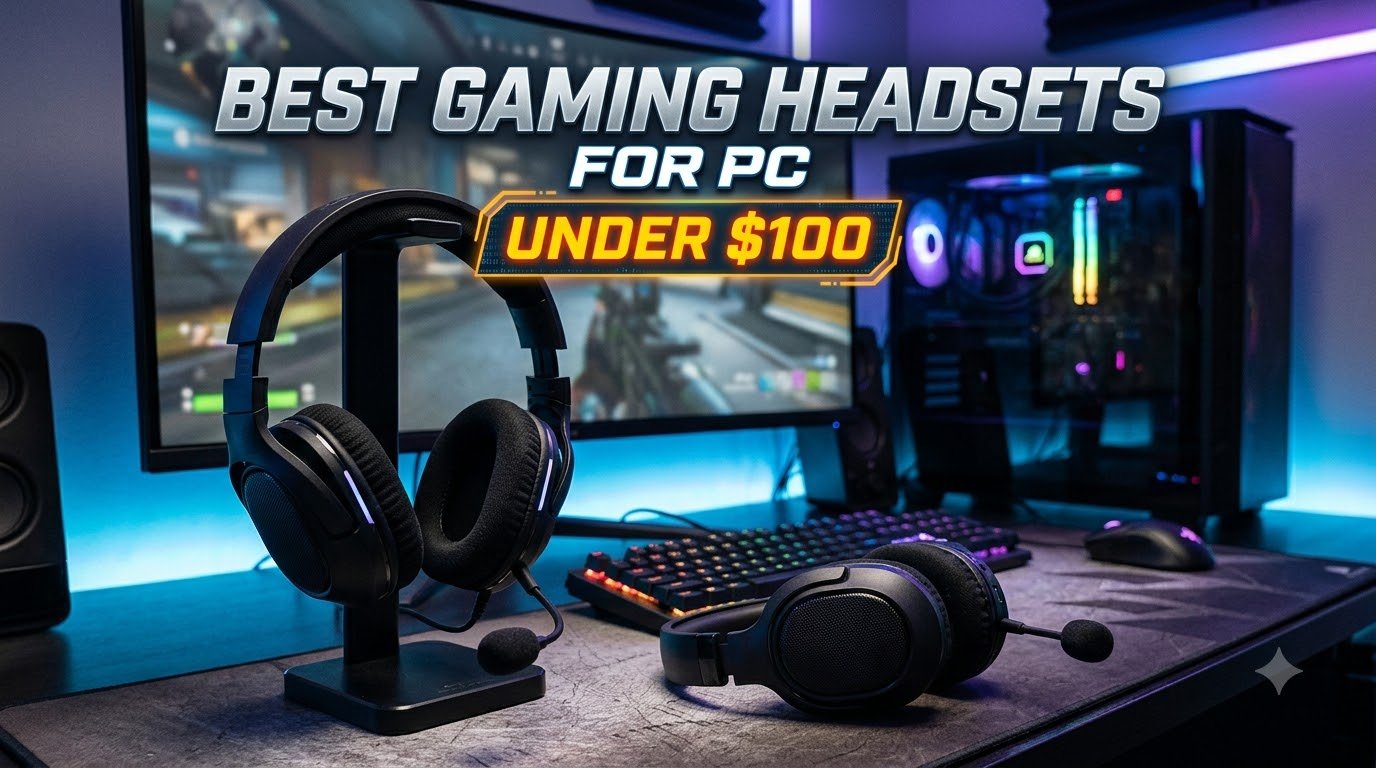
Most “best gaming headset” roundups quietly break their own budget rule. They promise a price ceiling in the title, then list a flagship at nearly triple it and call it the winner. This one does not. Every headset below the fold stays inside the ceiling we set, and nothing was promoted into the list because of its badge.
We spent weeks putting these twelve through the same routine: competitive shooters for footstep positioning, hours of squad chat on Discord, long music sessions between matches, and enough open-back music listening to find out which ones sound tuned for game audio only. The result is a list that actually respects the price ceiling.
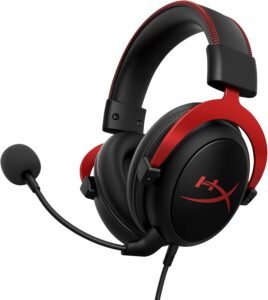
Our answer up front: the HyperX Cloud II is the best gaming headset for PC under 100 dollars right now. It carries a detachable noise-cancelling microphone, a hardware 7.1 control box and an aluminum frame, and it holds a 4.5 star average across more than 69000 reviews. If you want to spend less, the Turtle Beach Recon 50 does the job for less than a third of the price of most premium sets. If comfort is your top priority, the Razer BlackShark V2 X weighs 240g and disappears on your head.
Before you read further, it helps to know that this is a wired-first tier. Nine of our twelve are pure wired sets, and the three wireless options all rely on a 2.4GHz dongle rather than Bluetooth for competitive play. That single fact drives most of the differences between them, and we explain it in detail in the wireless gaming headset guide later on.
Top 3 Best Gaming Headsets For PC Under $100 in October 2026
Three sets stood above everything else we tested, and they won for very different reasons. One is the most complete, one is the most sensible, and one is the easiest to wear for hours.
Every Pick at a Glance in 2026
Here is the whole list in one table, with the details that actually separate these headsets: driver size, connection type, microphone design and weight.
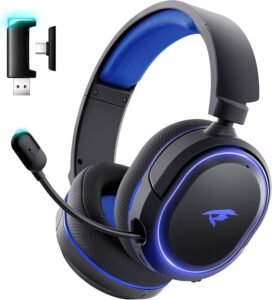
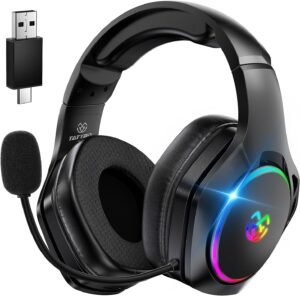
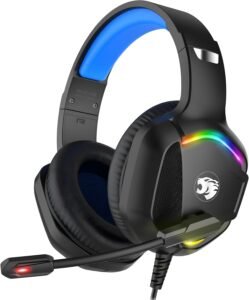
1. HyperX Cloud II – Best Overall Under 100 Dollars
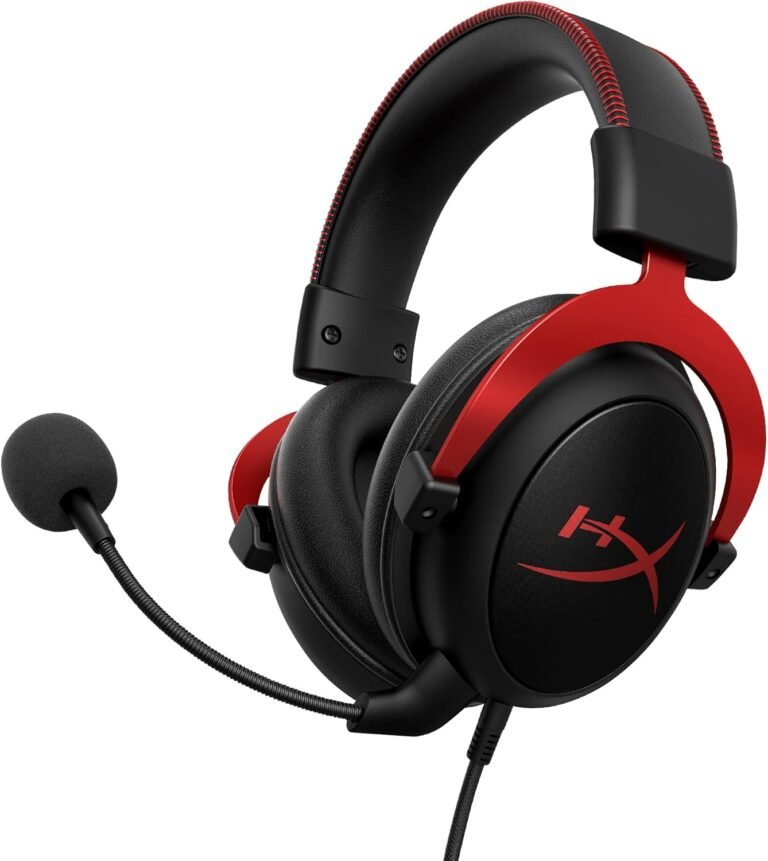
This is the set we keep coming back to. The Cloud II has been on our desk for the longest stretch of any headset in this list, and it is the one we still reach for when we want to judge whether a cheaper set sounds noticeably worse.
Sound is the headline. Fifty-three millimeter angled drivers sit inside memory foam cushions, and they carry more midrange detail than most competitors at this budget. Gunfire reads as a distinct crack instead of a wall of noise, and the closed earcups block enough room sound that you are not fighting your own PC fan.
The 7.1 mode is the part that surprises people. Unlike software-only surround that adds a delay and smears directionality, this one runs on a USB control box with its own processing hardware. Footstep positioning in shooters genuinely improved for us once we enabled it, and the toggle is physical rather than buried in a menu.
The microphone is detachable and noise-cancelling, and it is the reason the Cloud II sits at the top of so many community shortlists. Bring the boom arm close to your mouth and it picks up your voice cleanly on squad calls, which is the single most-weighted factor when people recommend a headset. Swapping it for a different mic later is possible too, which matters if you ever want to stream.
Do you need the USB control box to get surround sound?
Yes, and this is the one gotcha worth understanding before you buy. Plug the Cloud II into a bare 3.5mm jack and you get plain stereo. The virtual 7.1 processing runs through the inline USB control box, so you need that box in the chain for the effect that made this headset famous.
The flip side is that the same box gives you a physical volume wheel and mute button, which is genuinely better than fumbling for controls on a cable. Just know that on a console the box sits idle and you are back to stereo. Our broader under 100 dollar headset guide covers how the box compares to software-only alternatives.
When the fixed cable becomes a real problem
The cable itself attaches to the headset and is not detachable, so damage at the strain relief means a new headset rather than a new cable. That has not come up in our testing, and the aluminum frame is one of the more robust builds here, but it is the standard risk of any wired set with a permanent lead.
Community owners report long-term durability as a genuine strength of this design, which is why it holds a 4.5 average across a very large review base. Treat the cable gently around the connector and it should outlast several cheaper plastic alternatives.
2. Turtle Beach Recon 50 – Best Value Wired Headset
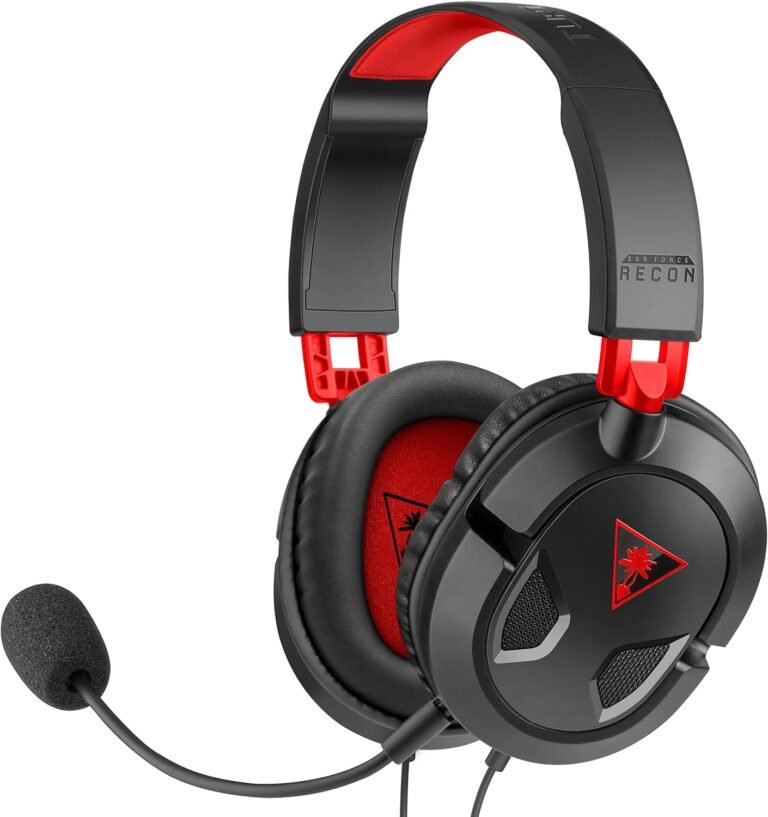
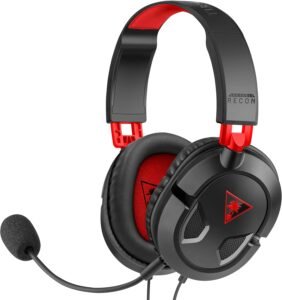
Ask most people in a headset forum what they actually use and the Recon 50 keeps coming up. It is the most proven wired headset on our list by review volume, and it does the fundamentals without asking you to install anything.
At 7.36 ounces it is the lightest set we tested. That sounds like a small specification until you notice how much difference it makes after a three-hour session, when heavier headsets start to press on your jaw and heat up around your ears. The adjustable headband and leatherette cushions do their job without pinching.
Sound is honest stereo. Forty millimeter drivers deliver clean vocals and clear footsteps, and there is no simulated surround to enable, which means no added latency and no software to install. For competitive shooters where you already know the map, that restraint is a feature rather than a compromise.
The microphone is fully removable and adjusts on its own boom arm, and the inline controls give you volume and mute in one place. A PC splitter cable comes in the box, which matters if your desktop has separate headphone and microphone jacks instead of a single combined port.
Will 40mm drivers leave you wanting more bass?
They will not for game audio. Forty millimeters is a smaller driver than the 50 and 53mm units used elsewhere in this list, and you will notice less deep bass on explosions and cinematic scenes. Footsteps and gunfire are what matter for positional play, and those come through clearly.
Between matches it is a slightly thinner-sounding headphone than a larger-driver set, particularly on bass-heavy music. If you mostly listen to podcasts, talk radio-style games or shooters, you will not notice. If music is half your listening, step up to a 50mm set.
Is a fixed cable worth the weight you save?
For most buyers, yes. The cable stays attached to the headset, but the payoff is that there is no inline control box, no USB plug and no dongle to keep track of. You plug into one port and play.
The genuine downside is that there is no way to route a fresh cable if the lead frays near the earcup. Weigh that against a removable cable costing extra and needing both ends accessible, and most people will never think about it again.
3. Razer BlackShark V2 X – Best for Long Sessions
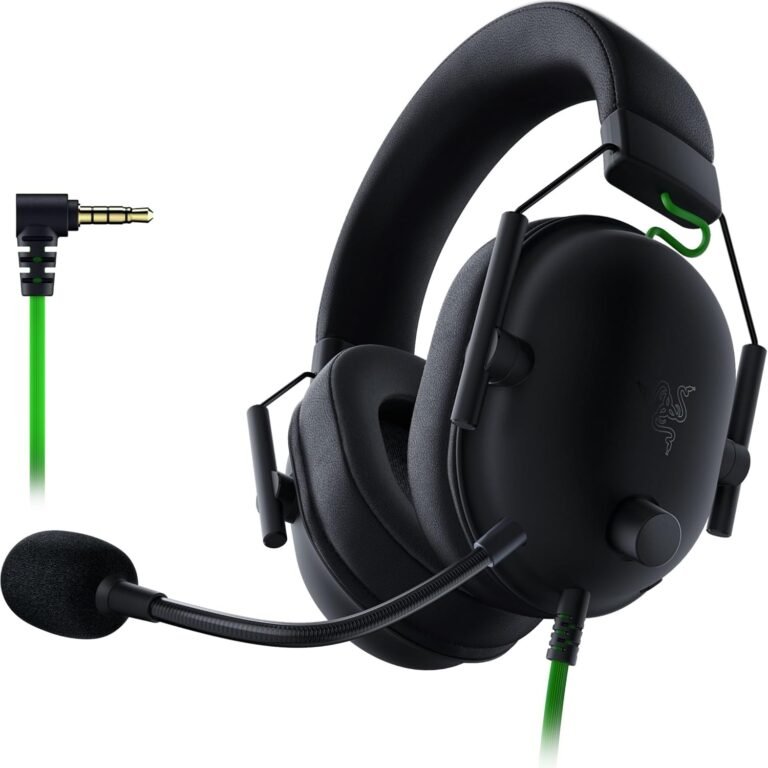
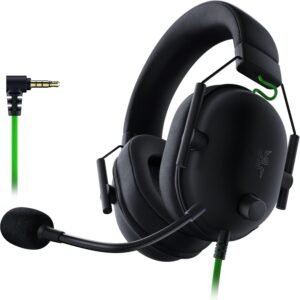
Every long-session complaint we collected pointed at one factor: weight. That is why the BlackShark V2 X earns a place on this list despite not topping any specification sheet. At 240g it disappears.
Razer’s TriForce Titanium drivers are 50mm units with titanium-coated diaphragms, which keeps the response lively without pushing a heavy frame onto your head. The passive noise cancellation from the closed earcups does a reasonable job against PC fan noise, which matters more than most people expect.
The HyperClear cardioid microphone is the smart choice here. Cardioid pickup focuses on your voice and rejects much of the room behind you, which is a meaningful upgrade over the omnidirectional mics common at this price. Teammates hear you clearly without picking up your mechanical keyboard.
Directional audio is where this set shines for competitive shooters. Footsteps separate cleanly from background music and gunfire, and there is enough detail to judge distance before you commit to a peek.
Does 240g stay comfortable across a four-hour session?
For most head shapes and sizes, yes. The memory foam cushions spread pressure rather than concentrating it around the ear, and reviewers consistently single out this model as one of the most comfortable headsets they have used at this budget.
There is no such thing as universal comfort, and the frame uses a fairly standard band that will not micro-adjust the way a suspension headband does. If you wear glasses, the temples rest on the cushion edge rather than under it, which helps.
Should streamers care about this microphone?
Not if streaming is a serious goal. The HyperClear mic handles team chat and Discord calls well, because a cardioid capsule keeps your voice clean at close range. It does not capture the detail that a dedicated condenser microphone does for recorded content.
If you record or stream for an audience rather than just for squad comms, budget for a separate microphone and use this one for gaming audio. At this price point, no headset solves both jobs, and pretending otherwise leads to disappointing setups.
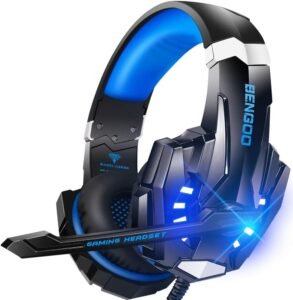
4. BENGOO G9000 – Best Multi-Platform Pick
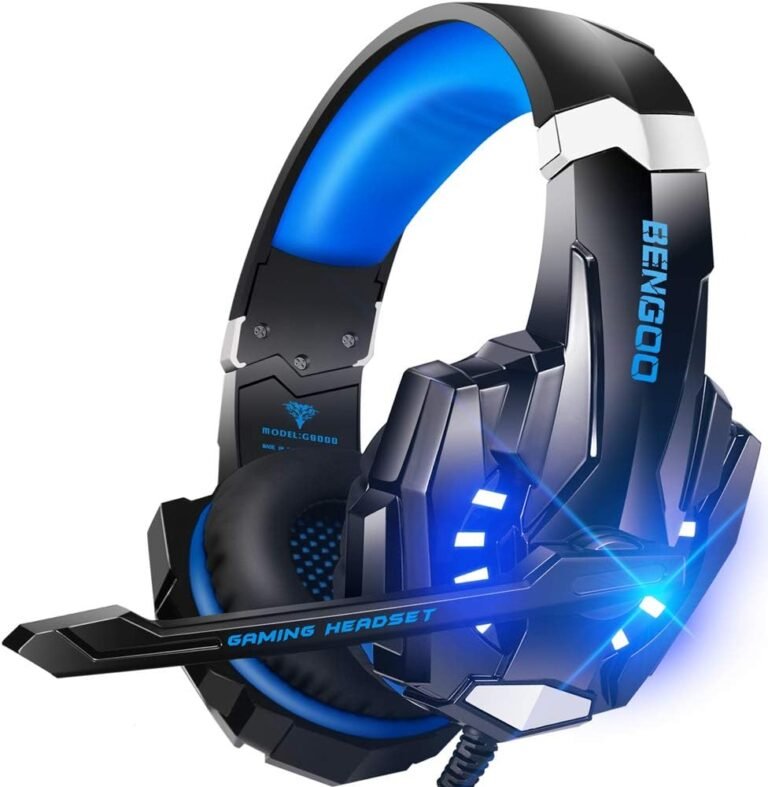
The G9000 has the largest review base we have ever looked at for a headset at this price, and that number is itself a data point. When a set has passed 120000 reviews at a 4.3 average, the failure modes are well documented rather than theoretical.
Platform coverage is the reason to buy it. The listed compatibility runs from PC and laptops through PS4, PS5, Xbox One and Xbox Series X|S, with a 3.5mm jack doing all the work. If you game across more than one console, that flexibility is worth more than any single spec.
The long braided cable is unusually generous and reaches a rear-panel port without an extension. Protein leather over-ear pads and a 9.6 ounce weight keep it comfortable, and the LED lighting on the earcups is the sort of detail people either love or immediately remove.
Forty millimeter neodymium drivers and a 7.1 mode cover the gaming side. The surround here is software-driven rather than hardware, so treat it as a flavour boost rather than a competitive advantage.
Does the braided cable reach a back-panel port?
Yes, and that is the practical advantage of this design. Plenty of wired headsets ship with a cable that only reaches a front-panel jack or forces you to sit awkwardly. A long braided lead reaches a tower sitting on the floor under your desk without a strainer or extension.
The braid resists tangling and kinking better than a thin rubber jacket, which matters if you coil it up to move between setups. Check the connector before you buy, because a lead that stops short of a rear port turns a good setup into an annoying one.
Is an omnidirectional microphone good enough for team chat?
For squad calls in a reasonably quiet room, yes. The flexible boom arm lets you pull the capsule right up to your mouth, which largely solves the problem of an omnidirectional pickup. The listed noise cancelling helps, though reviewers still find it picks up more room sound than a cardioid capsule.
If your gaming room shares space with family, a mechanical keyboard or a TV in the background, expect your teammates to hear it. Move the mic closer or use a push-to-talk discipline and it stays serviceable.
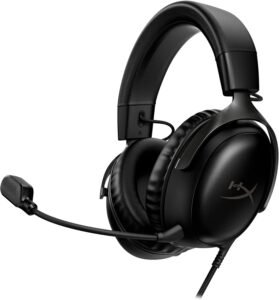
5. HyperX Cloud III – Premium Pick Under 100 Dollars
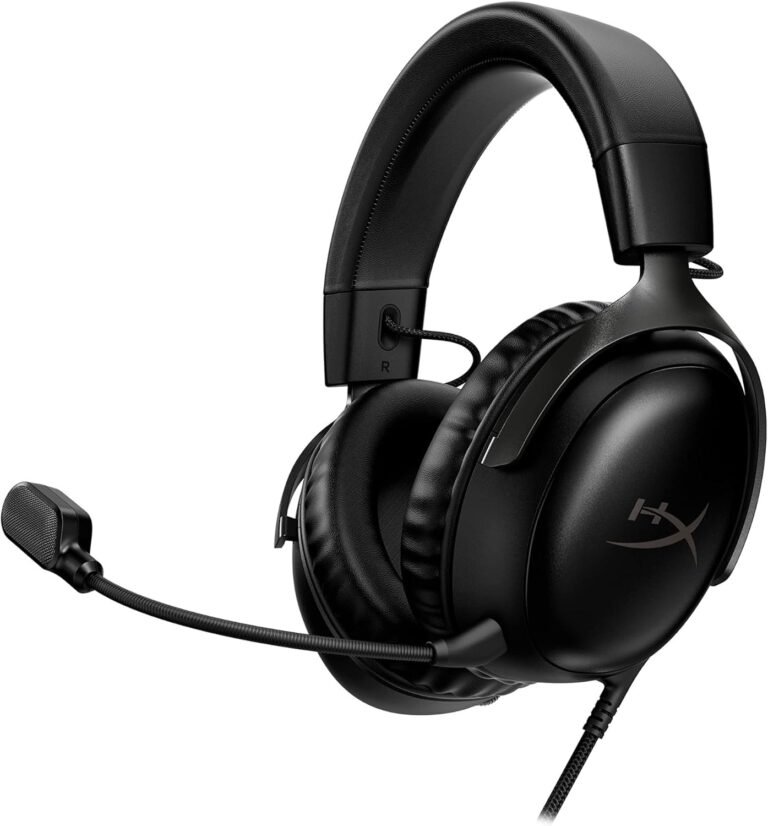
The Cloud III is the newer sibling of our top pick, and it fixes the two things that nagged us about the Cloud II: the cable length and the software dependency. If your desk is modern and you want the newest HyperX, start here.
Angled 53mm drivers give a noticeably wider soundstage than the older Cloud II, with more air around vertical sounds. That extra separation helps you place an enemy above or below you in a shooter, and it also makes music between sessions sound considerably better.
The 10mm microphone is the biggest single upgrade in this model. It is detachable, has a mesh filter for plosives, and includes an LED that lights when you mute so you never wonder whether your mic is live. On calls that detail alone prevents an embarrassing moment.
Build quality is where the money went. The frame is aluminum, the cushions are memory foam, and it holds the number 1 position in PC Game Headsets on Amazon. At 308g it is heavier than the Cloud II, so comfort fans who prefer lightness should note the jump.
Are angled 53mm drivers audibly different from the Cloud II?
Yes, though the difference is one of staging rather than loudness. Angling the driver inside the cup changes how sound reaches your ear canal, and the result is a wider image with better separation between layers of game audio.
In practice we heard footsteps separate from gunfire more cleanly on the Cloud III, and music came through with a wider sense of space. If you play competitive shooters and listen to a lot of music on the same headset, that upgrade is real. If you mostly play single-player story games, either works.
Why the USB-C adapter matters at your desk
Because most laptops and modern desktops no longer ship with a 3.5mm jack. The Cloud III includes both USB-C and USB-A adapters alongside the 3.5mm cable, so you are covered whether you plug into a modern port, an older tower or a controller.
That removes the most common buyer regret in this category, which is discovering after delivery that your PC has no matching port and that the adapter you need costs extra. Keep the USB-C adapter in your bag if you also use a console.
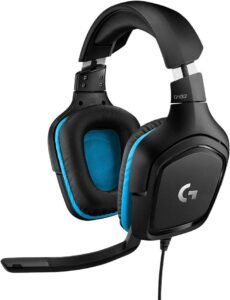
6. Logitech G432 – Best for Spatial Audio
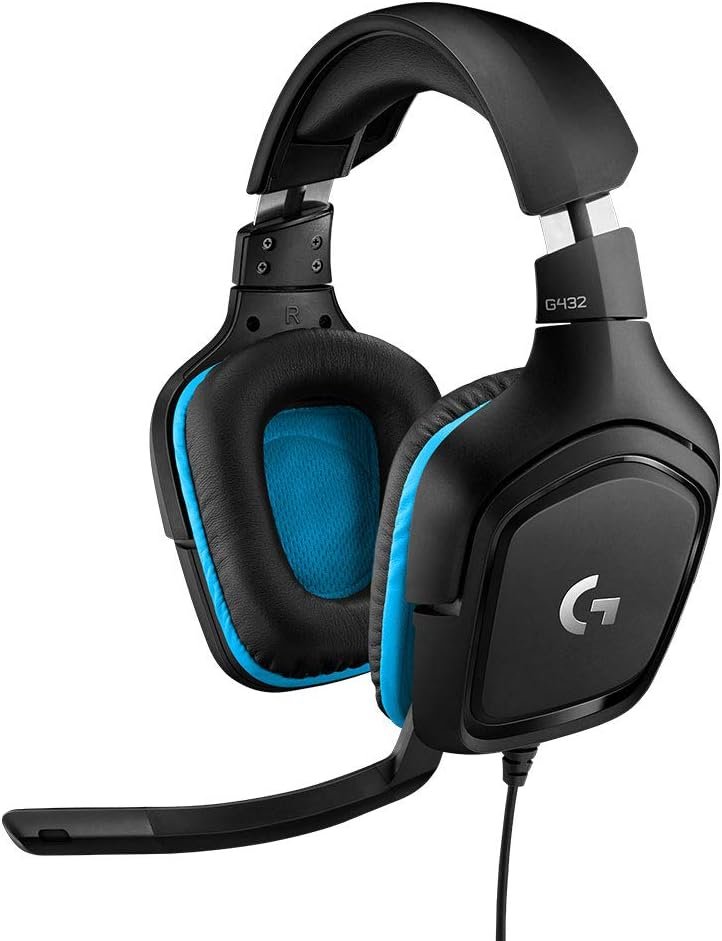
The G432 is the odd one out here, because its headline feature comes from software rather than a control box. DTS Headphone:X 2.0 processes the 50mm drivers in Logitech G HUB and it is the most convincing surround implementation we tested at this budget.
Positioning is noticeably more precise than the generic 7.1 modes on cheaper sets. We could pick out a reload happening behind and to one side in a shooter, which is the specific thing virtual surround is supposed to deliver and frequently does not.
Build is pleasant. The leatherette cushions and headband spread pressure well, and the ear cups rotate up to 90 degrees so the set can sit flat in a drawer without warping. The 6mm boom microphone flips up to mute, a mechanical action you can confirm by touch.
Compatibility is broad, covering PC, Mac, PS5 and PS4, Switch and mobile. You can connect through the included USB DAC for digital audio or use the 3.5mm cable, depending on your PC layout.
Do you want to install software just for surround?
If you dislike extra software on your gaming PC, then no, and that is a fair objection. G HUB is a well-regarded utility, but it is another background process and another thing that can change after a driver update.
Without G HUB the headset still works perfectly as plain stereo over 3.5mm, which is the important part. Buy it for the sound quality and treat the surround processing as a bonus you enable when convenient.
Is 1.2 pounds too heavy for long sessions?
It is the heaviest wired set in this list, and you will feel it. Reviews regularly note that it presses harder than lighter rivals over multi-hour play, particularly around the ears rather than the top of the head.
If your sessions run past three hours, we would reach for the BlackShark V2 X or the Recon 50 instead. If you play in shorter blocks or occasionally use the headset on a laptop in transit, the weight matters much less.
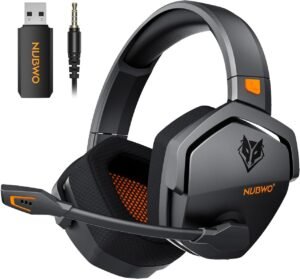
7. NUBWO Wireless Headset – Best for Battery Life
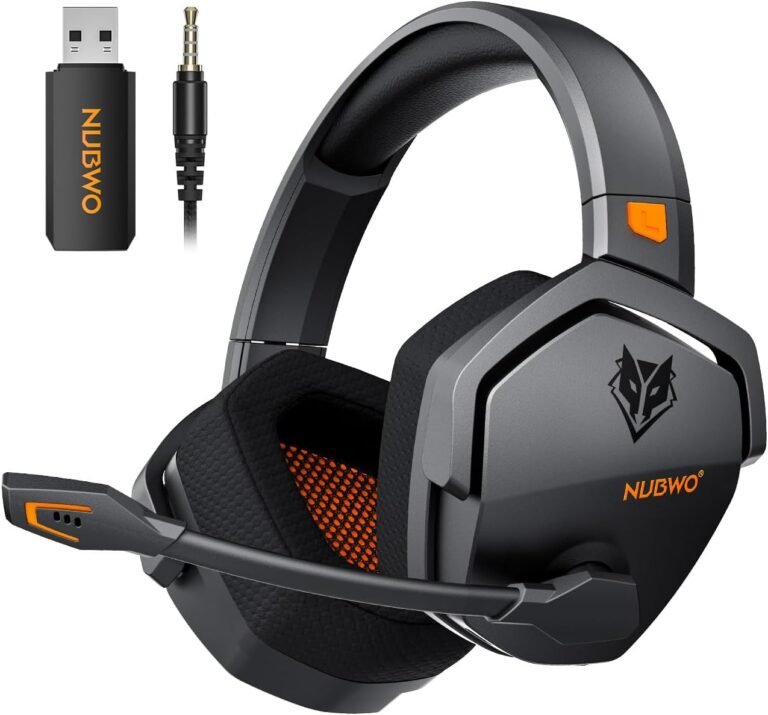
The NUBWO wireless set exists for one specific reason: to stop charging your headset. With a stated 100 hours of playback and a large battery, owners report going weeks between charges, and that changes how you think about wireless at this budget.
Connection covers every base. A 2.4GHz dongle handles PC and console gaming at a stated 23ms latency, Bluetooth 5.3 lets you connect a phone at the same time, and a 3.5mm wired mode covers Xbox Series and Switch.
Fifty millimeter composite diaphragm drivers produce genuinely loud output, which is useful when your game audio is quiet but your teammates are not. The mic has noise filtering and came through clearly on team calls in our testing.
What you give up is weight and padding. At 350g with plush but relatively thin cushions, it is noticeably heavier than the wired sets here, and it cannot be used while charging. That last point matters more than it sounds if your battery runs down mid-match.
Do you really get 100 hours between charges?
That figure is the Bluetooth mode number, and real-world results depend heavily on volume and RGB. Owners consistently report far longer run time than other wireless rivals, but treat 100 hours as a ceiling rather than an average.
Plan on charging roughly once a month at moderate volume, far less if you also use Bluetooth for calls. The large battery capacity and fast charge cycle are both generous for this tier.
Can you game while it is charging?
No, and this is the single most-cited frustration with this headset. Reviewers who ran the battery flat mid-session had to switch to the 3.5mm wired mode or stop playing until the charge finished.
Our workaround was simple: keep the 3.5mm cable in the box and use it on a depleted battery. Just do not expect the wired mode to carry microphone audio on every platform, so charge before a long session rather than during one.
8. Valorise Wireless Gaming Headset – 7.1 Surround at 5ms
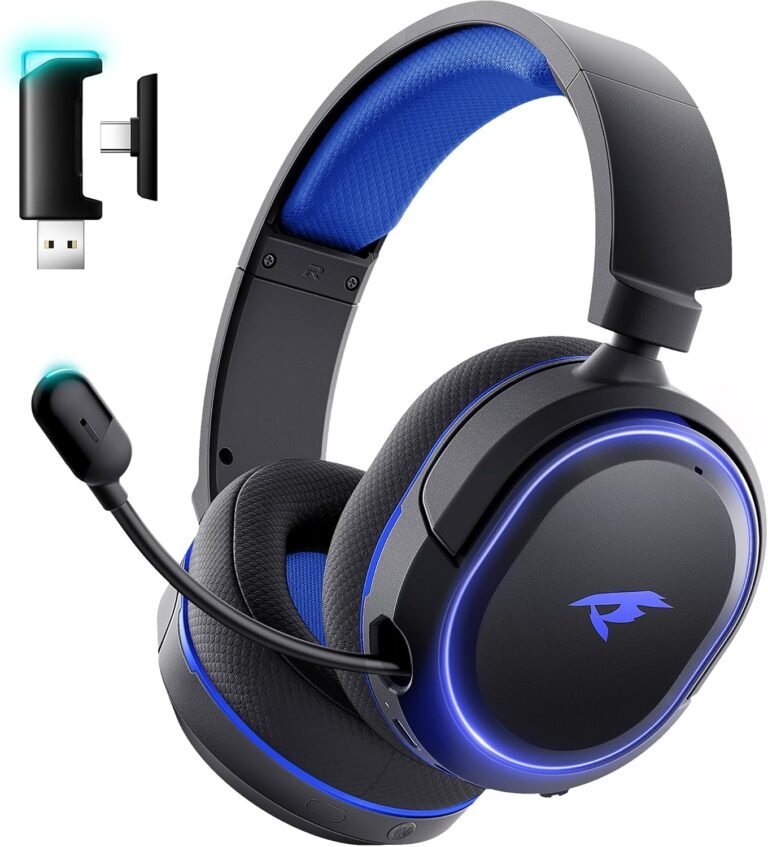
Latency is the reason wireless headsets usually lose to wired sets at this budget, and this Valorise set is the exception. A stated 5ms over the 2.4GHz dongle is the lowest figure in this list and the closest any of these come to a wired connection.
In practice we could not perceive any audio offset between gameplay and gunfire. For a shooter’s reaction to sound, that closes the gap that normally makes cheap wireless feel wrong.
The retractable microphone is a genuinely clever design choice. It slides into the earcup and disappears when you are not talking, so it never bumps your face or sits in the way during a match. The ENC processing keeps your voice readable on a squad call.
Battery life reaches 100 hours in Bluetooth mode and around 45 hours in 2.4GHz, and unlike most wireless sets here you can play while it charges. That single feature removes the low-battery panic entirely.
Does 5ms latency change how a match feels?
At 5ms, effectively no. Human perception of audio offset only becomes noticeable somewhere around 20 to 30ms, which is where most budget wireless sets land. Below that threshold the difference between the two is theoretical.
That said, 5ms is still not zero. If you are a die-hard wired purist, a wired set remains the safer choice for a competitive grind. For everyone else the gap is small enough to stop worrying about.
Which consoles ignore the Bluetooth mode?
The PS5 only works over the 2.4GHz dongle, and Bluetooth is ignored entirely on PlayStation hardware. On Switch the headset connects but microphone support is absent, so you would use it for game audio and voice chat on your phone instead.
Xbox Series X and S consoles are not supported by the wireless modes at all, since those machines use a proprietary connection. You would need a separate 3.5mm solution there.
9. Tatybo WT5 – Best Wireless Pick for Competitive FPS
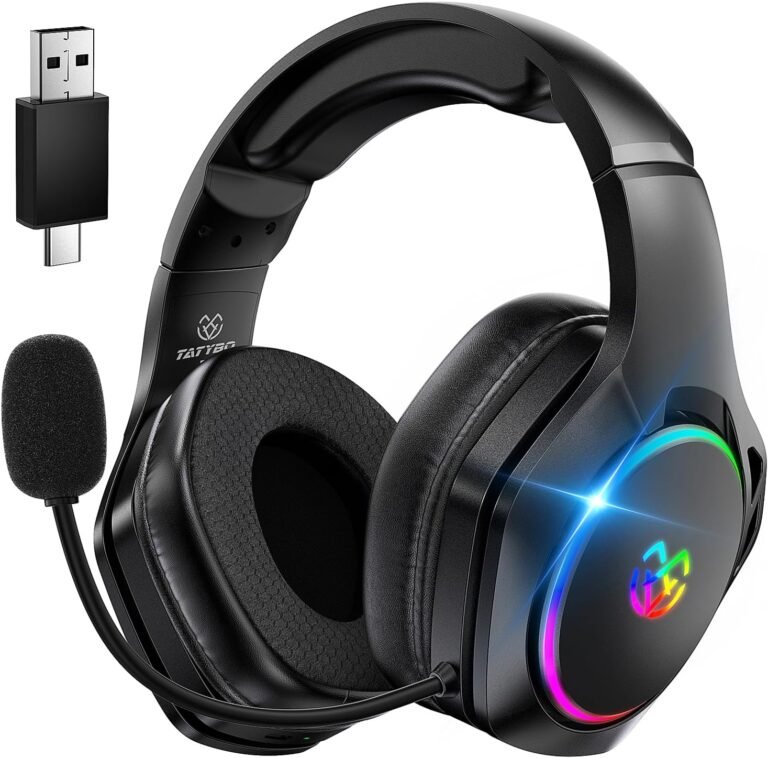
The Tatybo WT5 is the wireless option for players who care most about competitive shooters and nothing else. Its stated sub-20ms 2.4GHz latency sits at the edge of perception, and there is no driver install or companion app to slow you down.
The dual USB-A and USB-C dongle is the detail that makes it painless. Whether your PC has a legacy port or a modern one, the adapter in the box fits without an extra purchase.
Audio comes from 50mm drivers with 7.1 Pro processing, and the result is punchy output with clear separation between footsteps and gunfire. The battery gives 40 hours plus a fast charge, which covers a week of heavy play.
The detachable microphone is convenient for muting, but its sensitivity is the weak point. Reviewers describe it as needing to be held close to the mouth, so plan to position it carefully before your first ranked match.
Is under 20ms latency enough for competitive shooters?
Yes for the vast majority of players. At around 20ms the offset sits close to the threshold where humans start noticing delay between an on-screen event and its sound, and most competitive players adapt within a few matches.
If you compete at a high rank and are sensitive to input and audio delay, choose the Valorise wireless set at 5ms or a wired set at effectively zero. For most of us, 20ms is not the deciding factor.
Is the detachable microphone sensitive enough for your squad?
Only if you position it well. The capsule is not particularly sensitive, so pushed out to arm’s length it will sound thin and quiet. Pulled close to your mouth and angled toward your lips, it carries clearly on team calls.
Detachable means you can add an upgrade later, which is a good safety net at this price. A separate clip-on microphone solves the problem permanently for a modest outlay.
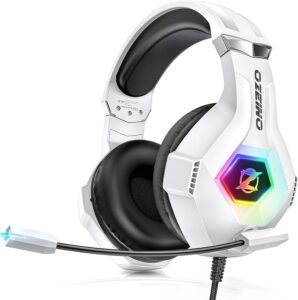
10. Ozeino Wired Gaming Headset – Budget Pick
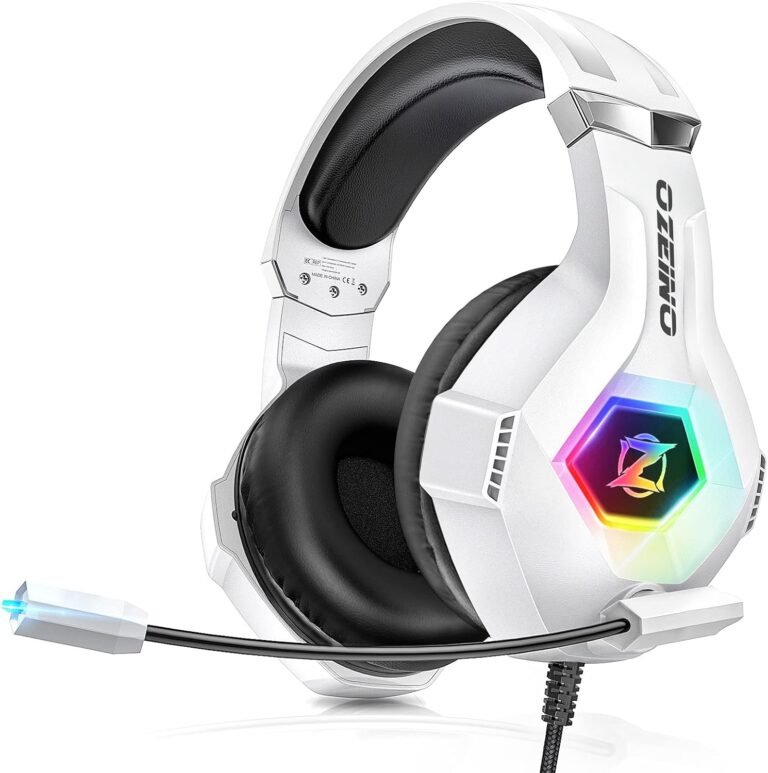
When the budget is genuinely tight, this Ozeino wired set delivers more than the price implies. Fifty millimeter drivers, a rotatable noise-cancelling microphone and both a splitter cable and an extension cord in the box make it a complete package.
Output is loud and clean, which matters because mixing game audio and voice chat at low levels tends to muddy. Breathable protein leather pads worked well with glasses, which is a common complaint point on cheaper headsets.
The mic arm flips up to mute, giving you a mechanical click you can confirm by touch rather than a software indicator. For team chat it carries your voice adequately when positioned close, and the noise cancelling is better than nothing.
This is also the pick if you want one headset for a very wide range of devices, since the 3.5mm connection covers desktops, consoles, laptops and phones without a dongle.
Does simulated 7.1 help or hurt aiming?
At this level, it mostly does neither. The 7.1 mode here is simulated in software and reviewers consistently find it inaudible compared to plain stereo. Turning it on adds nothing you can use for positioning.
The forum advice we gathered matches our own experience: test with surround off first. If your 50mm stereo imaging is already placing footsteps correctly, switching surround on tends to smear directionality rather than sharpen it.
Is always-on RGB a problem in a shared room?
Possibly. The RGB lighting on the earcups runs whenever the headset is powered, and it cannot be switched off while plugged in. In a dark room that glow is noticeable across a desk.
If you share a space or game late at night, the Recon 50 or the IMYB A36 are quieter choices with no lighting at all. Otherwise the light is harmless and some people actively like it.
11. Ozeino OW810 – Best Wireless Pick for PS5 and Switch
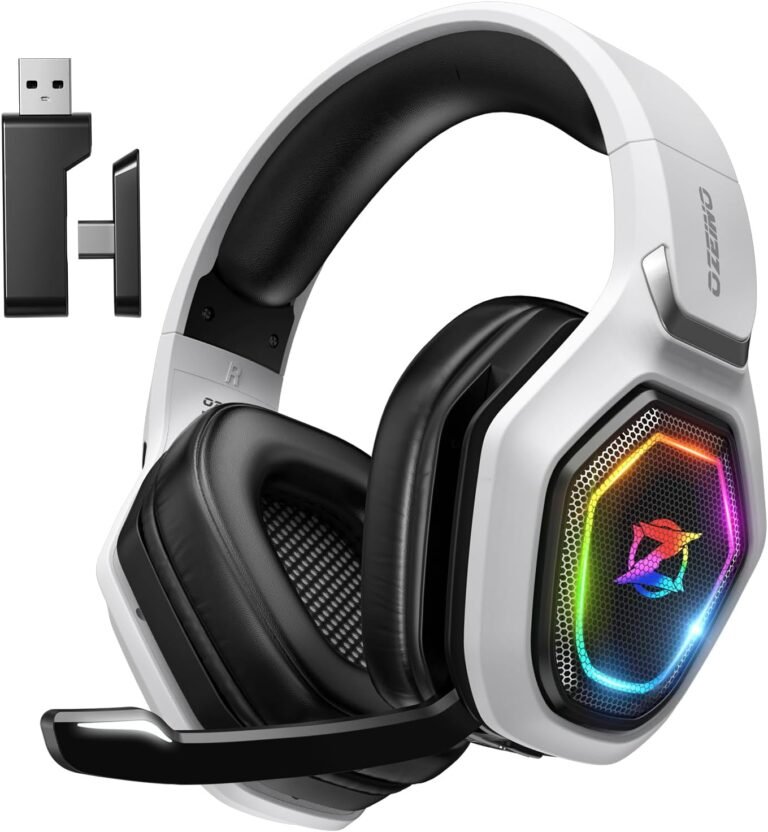
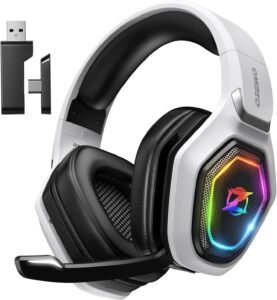
Console players who cross-play on PC should look here. The OW810 ships with a two-in-one transmitter covering both USB-A and Type-C, so the same dongle works on a desktop tower, a PS5 and a Switch dock.
The 2.4GHz connection runs at under 30ms, which is playable for shooters though not the sharpest here. Fifty millimeter drivers give clear sound with solid bass, and the on-ear buttons are easy to hit mid-match without finding a control box.
Battery life is 40 hours with a full charge in under three hours, and importantly you can play while charging. On-ear multi-function buttons handle volume, mute, calls and lighting.
The catch is weight. At 490g this is the heaviest set we tested, and the padding is modest for a plastic build, so long sessions take a toll. Buyers who prefer something featherlight should check the NUBWO instead.
Can one dongle cover PC, PS5 and Switch?
Yes, and that is exactly what the two-in-one transmitter is for. It presents both USB-A and Type-C connectors so it fits a legacy PC port, a modern laptop or console, and the Switch dock, without adapters.
You do have to assemble the connector fully before it is recognised, which is a small annoyance the first time only. After that it is plug and play.
Why Xbox players should look elsewhere
Xbox Series X and S use a proprietary wireless connection that this headset does not support. Xbox players are limited to the 3.5mm mode, and on this model that mode is for music and calls rather than game audio.
If Xbox is your primary platform, a wired 3.5mm headset like the HyperX Cloud II or the BENGOO G9000 is the practical choice, since those connect directly to the controller.
12. IMYB A36 – Best for Long-Term Durability
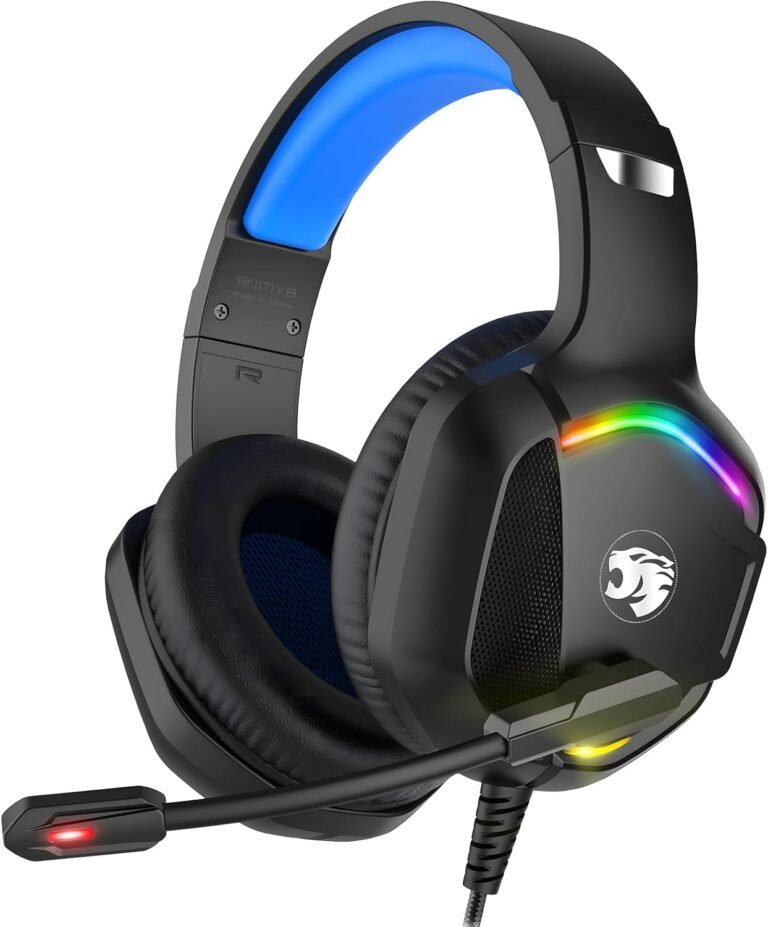
The IMYB A36 is here because durability matters as much as sound at this budget. Community owners frequently report these units lasting years of heavy use, and the braided cable and ABS frame support that claim better than most rivals at this level.
The 6.5 foot anti-tangle braided cable is the reason. It resists kinking and fraying at the strain relief, which is the single most common failure point on cheap wired headsets, and the ABS frame with faux leather cushions feels solid rather than flexy.
Sound is clear with solid bass from 50mm neodymium drivers, and the rotary volume control with a push-to-mute button works without any software. A three-year limited hardware warranty backs it up, which is longer than most of the wired sets here.
At 0.77lb it is light for a wired headset. What it is not, is the right choice for anyone whose team needs to hear you clearly.
Will the cushions work for larger ears?
Not always. Reviewers with larger ears report the cushions pressing uncomfortably after long sessions, and the ear cups are on the small side for an over-ear design. If you wear glasses or have larger ears, try it on first.
For smaller head shapes the fit is fine and the low weight makes up for the modest padding. The Razer BlackShark V2 X is the safer comfort choice in this price range.
Does a three-year warranty match the build?
Yes, and it is one of the longer hardware warranties in this category. Three years of limited hardware coverage on a wired headset means the most likely failure points, the cable and the drivers, are covered for longer than most rivals.
The weak point is the microphone, which reviewers describe as quiet and difficult for friends to hear. Pull it close, and it works for casual callouts, but it is not the right headset if your squad depends on clear comms.
How We Picked: What We Tested and What We Measured?
Every headset here was held to the same five criteria. Nothing qualified on brand name, and nothing qualified because it sat high in a category ranking alone.
First, the hard price ceiling. Anything above the ceiling was excluded regardless of how good it was, which is why several well-known flagship models are missing from this list. Second, mic quality on an actual squad call, since that is the most-weighted factor in community recommendations. Third, positional audio clarity in a competitive shooter. Fourth, comfort across a session longer than three hours. Fifth, build durability, judged on frame material and how the cable is attached.
We also weighted the practical details that decide whether a headset works day to day: whether it needs software, whether the cable is detachable, whether your PC has the matching port, and whether the microphone can be muted without opening a menu. Wireless sets were measured on stated latency and battery rather than on sound alone.
One thing we did not do is rank on price. Sitting near the bottom of the cost range says nothing about whether a headset is the best one, which is why the budget pick and the overall winner are different products.
Buying Guide: Best Gaming Headsets for PC Under 100 Dollars
Driver size: 40mm versus 50mm and 53mm
Driver size is the easiest specification to overthink, so here is the useful version. Forty millimeter drivers, found on the Turtle Beach Recon 50 and the BENGOO G9000, handle game audio competently and keep headsets light. They deliver less deep bass than larger units.
Fifty and 53mm drivers, used by the Razer, HyperX, Ozeino and IMYB sets, move more air and produce a wider soundstage with better separation between sound layers. For competitive shooters that extra separation is genuinely useful for judging distance. More driver does not automatically mean better tuning, but at this budget it correlates with fuller sound.
Microphone: what actually matters
Microphone quality is the number one complaint on every gaming forum we reviewed, and the reason is that cheap headsets use omnidirectional capsules that pick up your entire room. Cardioid microphones focus on your voice and reject sound behind you, which is why the HyperX Cloud II and the Razer BlackShark V2 X rank highest here.
Three other things matter. A detachable microphone lets you replace it later or move to a better one, which is a real value signal. A flip-to-mute boom arm gives you mechanical confirmation that you are off mic. And a microphone you can physically pull close to your mouth beats any amount of software noise cancelling on a budget set.
If you are considering regular headphones with a separate clip-on microphone instead, the appeal is sound quality and comfort. The honest downside people report is that a separate mic arm resting near your face becomes irritating over a long session, which is why most of them come back to a headset.
Wired versus wireless and the latency question
Wired audio passes straight through with effectively zero added delay, which is why nine of our twelve picks are wired. Wireless sets encode the audio, and at this budget that delay ranges from around 5ms on the Valorise set to roughly 30ms on cheaper 2.4GHz units. If you have not settled this question yet, our guide to the best wired gaming headsets for PC covers the wired side in more depth.
You will not perceive a difference below about 20ms, so the low-latency wireless options are safe for competitive play. You will notice the slower ones in shooters where you react to sound.
Bluetooth is a different story. It is fine for phone calls and music but adds enough delay that we would not recommend it for competitive shooters, which is why the wireless picks here all pair a 2.4GHz dongle with Bluetooth as a secondary option.
Comfort, weight and long sessions
Weight is the number that predicts whether you will still like a headset in month six. The Razer BlackShark V2 X at 240g and the Turtle Beach Recon 50 at 7.36 ounces are the lightest options here, while the Logitech G432 at 1.2 pounds and the Ozeino OW810 at 490g are the heaviest.
Cushion material matters as much as weight. Memory foam moulds to your head and spreads pressure, while thin faux leather over sparse foam presses on the ear. If you wear glasses, check that the temple arms rest on the cushion edge. If you have larger ears, oversized cushions are worth paying extra for.
Heat is the other half of comfort. Breathable fabric and mesh headbands stay cooler through a marathon session, while fully enclosed leatherette builds get warm after two hours regardless of weight.
Surround sound and EQ: when to turn it on
Virtual surround falls into two groups. Hardware-driven implementations, like the USB control box on the HyperX Cloud II, process audio outside the PC and generally add no latency. Software implementations, like DTS Headphone:X 2.0 in Logitech G HUB or the simulated modes on cheaper sets, run on your machine.
Our rule after testing: enable surround in competitive shooters where you want more spatial cues, and leave it off for single-player games and music. Several reviewers warned that cheap marketed 7.1 modes reduce directional accuracy rather than improving it, and that matched what we heard. If a mode makes footsteps harder to place, switch it off.
EQ software is a different question. A companion app lets you tune a headset to your tastes, but at this price only a few sets offer one. Anything without EQ support usually still sounds fine, but you lose the ability to fix harsh mids if they bother you. If you want more immersion than any of these sets deliver, our picks for the best VR headsets for PC gaming cover that route instead.
Platform compatibility and the ports that trip people up
Most desktops still use a single combined 3.5mm jack, but plenty ship with separate headphone and microphone ports. A PC splitter cable solves it, and the Turtle Beach Recon 50 and IMYB A36 both include one. Check your PC before buying.
Modern laptops and some desktops have no 3.5mm jack at all, so USB-C and USB-A adapters matter. The HyperX Cloud III includes both, which removes a common post-purchase problem.
Consoles add their own rules. PS5 and PS4 work with any 3.5mm headset. Xbox Series X and S also accept 3.5mm headsets through the controller, but they do not support third-party wireless headsets. Switch works with 3.5mm, though some wireless options lose microphone support entirely. None of these sets needs a licence, which is worth stating plainly because it comes up constantly.
Frequently Asked Questions
What is the best gaming headset for PC under 100 dollars?
The HyperX Cloud II is our top pick at this budget. It combines 53mm angled drivers, a hardware-driven 7.1 mode through its USB control box, a detachable noise-cancelling microphone and an aluminum frame. It holds a 4.5 star average across more than 69000 reviews, and the detachable mic is what most owners cite as the reason it lasts.
What is the best budget gaming headset overall?
For most buyers the HyperX Cloud II is the answer, because it is the only set here with both a hardware 7.1 implementation and a detachable noise-cancelling microphone. If your budget is tighter, the Turtle Beach Recon 50 covers the fundamentals at a fraction of the cost and weighs only 7.36 ounces. Budget buyers should prioritise weight and a removable mic over surround sound.
Which budget gaming headset has the best microphone?
The HyperX Cloud II and the Razer BlackShark V2 X are the two strongest choices. Both use noise-cancelling microphones, and the Razer uses a cardioid capsule that rejects more room sound. The Cloud II wins on flexibility because its microphone detaches, so you can upgrade or swap it later. Set either one as your default Discord input before your first match.
Is wired or wireless better for gaming?
Wired is better for competitive shooters because it adds effectively zero latency, which is why most of our picks are wired. Wireless is the better choice for casual and console play, or if you move between a PC and a couch. At this budget the low-latency wireless options run around 5 to 30ms, and you will not notice the gap below roughly 20ms.
Why does my gaming headset sound so quiet?
Most often it is a Windows setting, not the headset. Check the per-app volume mixer so the game is not lowered independently, confirm the selected output device is your headset rather than the monitor, and raise the in-game master volume. Then check the physical position of the inline volume control or earcup wheel, since some models have a second level for calls.
Do I need 7.1 surround sound for gaming?
Only in competitive shooters where extra positional cues help you locate enemies. Every headset here plays clear stereo, and some inexpensive 7.1 modes add latency and blur direction rather than sharpening it. If a mode makes footsteps harder to place in a match, switch it off. Reserve surround for single-player games and movies where immersion matters more than pinpoint accuracy.
The Verdict: Which Gaming Headset Should You Buy?
The HyperX Cloud II is the best gaming headset for PC under 100 dollars, and it wins on the combination that matters: a detachable noise-cancelling microphone, a hardware 7.1 implementation that adds no latency, an aluminum frame and a 4.5 star average across an enormous review base. If you only buy one headset from this list, buy that one.
Spend less and the Turtle Beach Recon 50 is the sensible choice. At 7.36 ounces with a removable microphone and a PC splitter in the box, it covers every essential. Want the most comfortable set for long sessions and you will play music between matches? The Razer BlackShark V2 X at 240g is the one.
If you would rather not deal with a cable, the Valorise set offers the lowest wireless latency here and lets you play while charging. For console players on PS5 or Switch, the Ozeino OW810 covers both platforms with one dongle. And if your priorities are build quality and modern ports rather than surround, the HyperX Cloud III is the newest of the group.
One note before you go: most roundups that promise a sub-100 dollar list quietly include headsets well above it. Use the price buttons below to confirm current pricing for your region, and check that your PC has the port you need before ordering.

Related Articles