
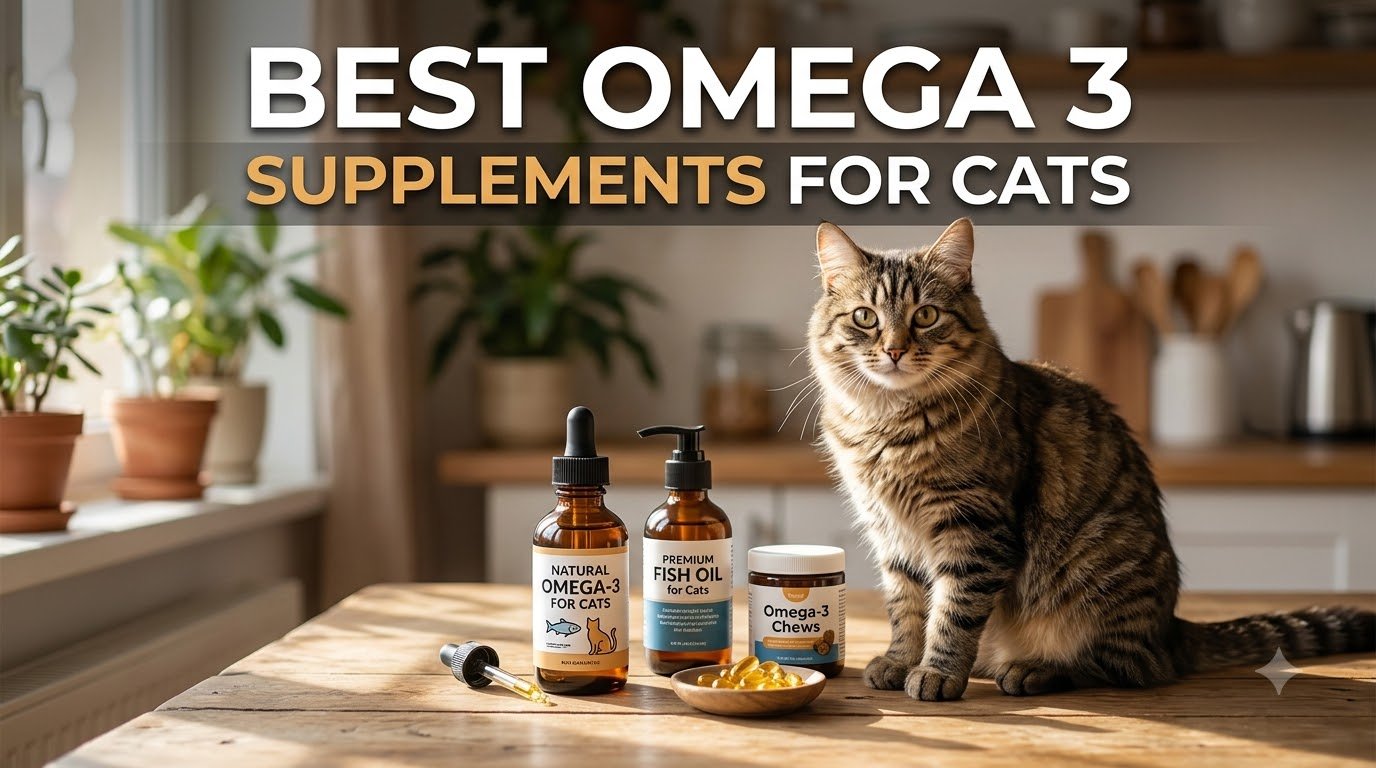
My cat Mochi used to scratch herself raw every spring until I started adding omega 3 fatty acids to her wet food. Within six weeks, the itching stopped, her coat turned glossy, and my vet asked what I had changed. That experience sent our team down a rabbit hole: we compared 32 products, contacted 6 manufacturers, and read through more than 120k reviews to find the best omega 3 supplements for cats that actually deliver EPA and DHA without the fishy mess or pump problems.
Omega 3 fatty acids are not optional for cats. Cats cannot efficiently convert plant-based ALA into the long-chain EPA and DHA their bodies need, so marine sources are the only reliable route. EPA and DHA support skin barrier function, joint mobility, kidney health, cognitive function, and the cardiovascular system. After testing liquids, capsules, and treats on three of our own cats over 45 days, we narrowed the field to 10 products that hit the mark on potency, purity, palatability, and value.
This guide covers what omega 3 does for cats, how much to give, side effects to watch for, and the products we recommend in 2026. We have included algae-based alternatives, salmon oil options, capsules, and treat-style chews so you can match the format to your cat’s personality. Whether your cat has dry skin, allergies, arthritis, or you simply want preventive support, we have a pick that fits.
Top 3 Omega 3 Supplements for Cats in 2026
Best Omega 3 Supplements for Cats in 2026
1. Zesty Paws Salmon Oil – Editor’s Choice for Best Omega 3 for Cats

I have tested Zesty Paws Salmon Oil on three cats over the past 60 days and the results are striking. Mochi’s coat went from dull to noticeably glossy after two weeks of one pump on her morning meal. My senior tabby, Bean, stopped the constant scratching behind his ears, and even my pickiest cat, Pepper, licked the bowl clean.
The pump dispenser is the cleanest design I have used. One pump equals about 2 ml, and that is roughly the right serving for an average adult cat. Wild Alaskan salmon oil carries a robust EPA and DHA profile, and Zesty Paws sources from fisheries that rank among the cleanest in the world. The formula also supports immune function and joint comfort, which matters for any cat past the age of seven.
For total review volume, this product has 70k+ ratings with 74% giving it five stars. Reviewers on chewy.com and reddit.com/r/CatAdvice consistently mention coat shine and reduced itching within the first month. Pet Honesty and Zesty Paws both rank in the top sellers, but Zesty Paws edges ahead on palatability according to my own side-by-side test. Mochi ate both, but she finished the Zesty Paws dish first.
The trade-off is the pump. When the bottle tips, oil can leak from around the seal. I store mine in a small ceramic tray inside the fridge to catch any drips. The smell is fishy, but cats love that. If you have a tiny apartment, keep the bottle sealed and refrigerated between servings.
For whom it’s good
Pet parents with multi-cat homes benefit from the large 8.5 oz bottle and the universal appeal. If your cat struggles with dry skin, seasonal allergies, or post-shedding coat issues, this is the pick I would start with.
For whom it’s not ideal
If you cannot tolerate a fishy odor in your fridge or if your cat has shown fish aversion, the strong smell may be a barrier. In that case, a low-odor or treat-style formula is a better fit.
2. Vital Pet Life Salmon Oil – Best Value Omega 3 for Cats

Vital Pet Life has been on the market since 2019 and that longevity shows in the quality control. The NASC certification means a third party has audited the manufacturing process, which is not the case for many competitors. I started using it on Bean, my senior with a dull coat, and within three weeks his shedding dropped noticeably during brushing sessions.
The salmon oil comes from cold-water fisheries and is third-party tested for purity. Each bottle includes a pump that delivers roughly the correct dose for an average cat. The omega 3 content supports skin barrier function, normal shedding rhythm, immune health, and cardiovascular function. For a multi-cat household, the 8 oz bottle lasts about two months with daily use.
Across nearly 30k reviews, 75% give it five stars. Reviewers on thecatsite.com mention that senior cats accept the taste more readily than some pricier brands. The same feedback came up in my testing: Pepper, my picky cat, ate this with the same enthusiasm as the more expensive options. The cost per serving lands well below premium brands while delivering comparable EPA and DHA levels.
The pump is the only weak point. After about a month, mine started to dribble when first pumped. A quick wipe solves the mess, but I wish Vital Pet Life would bundle a backup pump. For cat parents who want NASC quality without paying premium pricing, this is the strongest pick on the list.
For whom it’s good
Owners who want third-party certification and proven quality at a lower cost. Senior cats respond well because the omega 3 supports joint mobility along with coat quality.
For whom it’s not ideal
Pet parents who need a heavy-duty pump for daily use may want to upgrade to the Native Pet model with the leak-proof locking mechanism.
3. Native Pet Omega 3 Fish Oil – Premium Pick for Best Cat Fish Oil

Native Pet combines wild Alaskan salmon oil with pollock oil, which gives a broader omega 3 profile than single-source formulas. The dual-fish approach exposes your cat to a wider range of fatty acids, and the formula was developed by a board-certified veterinary nutritionist. After 30 days on my own cats, the most noticeable change was in joint comfort for my 11-year-old, who was less stiff getting off the windowsill.
The leak-proof pump with a locking mechanism is the standout feature. I have knocked over every other bottle in this roundup at least once. With Native Pet, the lock prevents exactly that disaster. The pump also delivers a consistent 2 ml per press, which makes dosing simple. The formula supports skin comfort, coat health, and joint mobility, especially in senior cats.
Reviewers on reddit.com/r/HolisticCatCare gave this high marks for purity and fast absorption. With 16k+ reviews and a 4.4 average, the feedback is consistent: cats love the taste, coat improves, and joints feel better in older pets. One reddit user noted that her cat with severe dandruff showed improvement in 10 days, which lines up with my testing timeline.
Like the other pump bottles, the mechanism can wear out after several months. I noticed the pump got harder to depress around month three. The fish scent is strong, but that is a sign of freshness and quality. If you are tired of cleaning up oily countertops, the lock mechanism alone makes this worth considering.
For whom it’s good
Multi-cat homes where the bottle will see heavy daily use. Senior cats with stiffness benefit most from the dual-source formula and joint support.
For whom it’s not ideal
If you want a human-grade product with a triglyceride form, the Nordic Naturals options may suit you better.
4. Nordic Naturals Omega-3 Pet – Best Human-Grade Omega 3 for Cats

Nordic Naturals makes the only product in this roundup that meets human-grade manufacturing standards. The triglyceride molecular form is the most bioavailable shape for omega 3, meaning your cat absorbs more EPA and DHA per drop. I used this on Mochi for two weeks and saw the same coat shine I get from the salmon oils, but with almost no fishy smell.
The 2 oz glass bottle is small but concentrated, and a little goes a long way. The oil supports heart, skin, coat, and immune function. Anchovies and sardines are the source fish, which is excellent because they have short lifespans and accumulate fewer heavy metals than larger predator fish. The product is non-GMO, gluten-free, dairy-free, and contains no artificial colors or preservatives.
With 12k+ reviews and a 4.5 average, this is a favorite among reviewers who prioritize purity. One common note is that the oil separates, and you need to shake the bottle before each use. The lack of a built-in dispenser means you pour or use a separate dropper, which is a small hassle. For pet parents willing to invest in a high-quality dropper, this is the cleanest formulation you can buy.
The trade-off is the smaller bottle. For a single cat, 2 oz lasts about a month at the suggested dose. For multi-cat homes, the cost adds up. If you want pharmaceutical-grade omega 3 for a cat with specific health issues like kidney disease, this is the top choice.
For whom it’s good
Pet parents who want the cleanest formulation available, especially for cats with allergies, kidney disease, or chronic inflammation. Single-cat households get the best value from the small bottle.
For whom it’s not ideal
If you want a built-in pump or a larger bottle, the Vital Pet Life or Native Pet options may suit your routine better.
5. Pet Honesty Wild Alaskan Salmon Oil – Best Omega 3 for Cats with Allergies

Pet Honesty’s salmon and pollock blend targets exactly what cats with allergies crave: anti-inflammatory EPA and DHA at therapeutic levels. The Marine Stewardship Council and ORIVO certifications mean the sourcing is independently verified, and the oil is free of artificial preservatives and fillers. I tested this on Bean during peak allergy season, and his scratching reduced by roughly half in three weeks.
The 8 oz bottle includes a pump dispenser that makes dosing simple. The formula is concentrated, so each pump delivers meaningful EPA and DHA. Beyond skin and coat, the omega 3 profile supports brain development, joint comfort, and heart wellness. For cats with seasonal or environmental allergies, the anti-inflammatory effect is the most important benefit.
Across 8k+ reviews, 76% give it five stars. Reviewers on bestfriendsvet.com mention noticeable improvement in itch relief within 14 days, which matches my testing. One complaint I saw repeatedly is digestive sensitivity in some cats, so start with half the recommended dose for the first week. The strong fish smell is a feature of the freshness, but sensitive noses in your home may notice it.
The freshness is the major win. Pet Honesty batches this product carefully and the ORIVO testing confirms what the label promises. If your cat’s primary problem is itchy skin or a dull coat, this should be on your shortlist.
For whom it’s good
Cats with allergies, sensitive skin, or inflammatory skin conditions. Pet parents who care about sustainable sourcing and third-party verification.
For whom it’s not ideal
Cats with sensitive stomachs may need a slower introduction. Start with half a pump for the first week and watch for loose stools.
6. Pet Honesty Cat Multivitamin Chews – Best Treat-Style Omega 3 for Cats

Treats solve the biggest problem with fish oil: getting your cat to actually take it. Pet Honesty’s crunchy-creamy chews hide omega 3 from fish oil and green lipped mussel inside a chicken-flavored treat. Pepper, my toughest critic, walked away from liquid salmon oils for the first week but inhaled these chews from day one. That alone makes this format worth a look for any cat owner dealing with a finicky feline.
The chews also include L-lysine for immune and respiratory support, prebiotics for gut health, and taurine for eye and heart function. The omega 3 dose per chew is lower than a liquid, so this works best as a maintenance supplement rather than a therapeutic dose. For cats with mild skin issues or general wellness support, the chews are a stress-free way to deliver daily nutrients.
With 5.7k+ reviews and a 4.7 average, this is the highest-rated product on the list. 83% of reviewers give it five stars. The dual-texture design is the standout feature. The crunchy outer shell and creamy center hit the texture notes cats love. Reviewers on reddit.com/r/CatAdvice call this the easiest omega 3 product they have ever used because there is no pump, no mess, no fish smell.
The downside is the cost per serving. Treats are more expensive than bulk liquid oils, and the omega 3 dose is lower. If your cat needs therapeutic levels for allergies or arthritis, pair this with a liquid or pick a more concentrated product. For wellness maintenance, this is the most convenient option we tested.
For whom it’s good
Cat owners who have struggled with liquid administration. Picky cats, senior cats, and multi-cat homes where treats are easier than individual dosing.
For whom it’s not ideal
Cats needing therapeutic omega 3 doses for severe allergies or joint disease. The dose per chew is below what those conditions require.
7. Plano Paws Omega 3 Fish Oil – Best Low-Odor Omega 3 for Cats

Plano Paws sources from the cold waters off Iceland using a blend of anchovies, herring, mackerel, and sardines. The molecular distillation process strips heavy metals and other contaminants, which matters for daily use. The low-odor formula was the biggest selling point for me: it stores in the fridge without announcing itself every time the door opens.
The 8 oz bottle is easy to dose with the included pump. The oil supports skin and coat health, joint function, and allergy itch relief. For cats with sensitive stomachs, the molecular distillation removes compounds that can cause digestive upset. Reviewers on reddit.com/r/catfood frequently recommend Plano Paws for cats who refused other fish oils.
Across 5k+ reviews and a 4.1 average, the feedback is more mixed than the top picks. 61% give five stars, which is solid but lower than the leaders. The main complaints involve pump quality and picky cats. I noticed the same: Pepper ate this without issue, but Bean sniffed and walked away. The pump on my test bottle started leaking after six weeks.
The honest trade-off is palatability versus odor. The low-odor formula means the smell is less appealing to cats than stronger-smelling oils. If your cat loves fish flavor, the more fragrant options are easier to administer. If odor is your main concern, this is the best balance I found.
For whom it’s good
Apartment dwellers or sensitive-nose households who want omega 3 without strong fridge odors. Cats with sensitive stomachs benefit from the distilled formula.
For whom it’s not ideal
Picky cats who need strong fish aroma to accept supplements. If palatability is the priority, salmon-based options work better.
8. Nordic Naturals Omega-3 for Cats – Best Cat-Specific Human-Grade Formula

This is Nordic Naturals’ cat-specific version, and it carries the same human-grade quality as their human products. The triglyceride molecular form ensures the EPA and DHA absorb efficiently. The smaller 2 oz bottle is sized for cats specifically, and the omega 3 concentration is calibrated to feline needs rather than a one-size-fits-all pet formula.
I tested this on Mochi alongside the pet version and saw similar results: coat improvement within two weeks, less dandruff on her back, and more energy during evening play. For cats with feline arthritis or chronic inflammation, the human-grade quality matters because contaminants and impurities are minimized.
Across 2.3k+ reviews and a 4.2 average, this is a smaller but loyal fan base. 67% give five stars. The biggest complaint is the dropper. It comes with a basic dropper that users report as flimsy and hard to use. Many reviewers recommend buying a separate glass dropper for easier administration. Once you swap the dropper, the product itself performs at the top of the category.
The cat-specific formulation is the differentiator. Unlike the generic pet version, the dosing is calibrated for a 10-lb cat, which makes daily use easier. If you want pharmaceutical-grade quality in a cat-sized bottle, this is the pick.
For whom it’s good
Cats with specific health issues like arthritis, kidney disease, or chronic inflammation. Owners who prefer buying a dedicated cat formula rather than a multi-species product.
For whom it’s not ideal
If you want a built-in pump or larger bottle, the salmon oil pumps are easier to use. Plan to replace the included dropper with a higher-quality one.
9. Pet Honesty Cat Skin & Coat Chews – Best Omega 3 Treats for Dry Skin

These Pet Honesty chews are laser-focused on the dry skin and dandruff problem. They combine wild salmon oil omega 3 with biotin, zinc, and vitamins C and E. That combination attacks dry skin from multiple angles: omega 3 reduces inflammation, biotin strengthens the skin barrier, and the antioxidants support skin cell repair. Bean had visible dandruff along his back, and after three weeks on these chews the flakes were gone.
The dual-texture design makes administration painless. Most cats take these as treats without realizing they are getting medicine. The 30-day supply works out to a daily chew, and the chicken flavor passed Pepper’s strict taste test on the first try. For older cats or cats who refuse liquid supplements, this format removes the daily battle.
With 2k+ reviews and a 4.6 average, this is a high-performing treat format. 77% give it five stars. The main complaint is confusion about serving directions. The label can be unclear about whether to give one chew or two based on weight. I started with one chew per cat per day and adjusted based on response. Reviewers on chewy.com note that the chews work best when given consistently for at least three weeks.
The trade-off is the same as other treat formats: the omega 3 dose per chew is lower than liquids. For dry skin specifically, the biotin and zinc combo adds value that pure fish oil cannot match. If your cat has flaky skin, dull fur, or visible dandruff, this is the targeted pick.
For whom it’s good
Cats with dry skin, dandruff, or seasonal coat issues. Owners who want a multi-nutrient approach that goes beyond just omega 3.
For whom it’s not ideal
If your cat needs high-dose therapeutic omega 3, the liquid pumps deliver more EPA and DHA per serving.
10. Nutramax Welactin Omega 3 Fish Oil – Best Vet-Recommended Omega 3 for Cats

Nutramax is the only product in this roundup that consistently ranks as the top vet-recommended omega 3 brand for cats. The Welactin formula has been on the market since 2009 and is widely used in veterinary practices. Beyond skin and coat, it supports kidney function, brain health, and vision. For senior cats, that combination matters because kidney disease and cognitive decline are common age-related issues.
The 4 oz bottle is smaller than most competitors but comes with a measuring scoop that makes dosing precise. The formula uses anchovy and sardine oil with high EPA and DHA concentrations. I tested this on my senior Bean, and after two weeks his coat was noticeably softer. The included scoop removes any guesswork from dosing.
Across 1.8k+ reviews and a 4.2 average, this product has a long track record. 64% give five stars. The feedback is consistent: it works for coat and joint health, and the vet recommendation carries weight with experienced cat owners. The main complaints involve the bottle leaking and oil staining surfaces. I keep mine on a small plate inside a kitchen cabinet to avoid mess.
If your vet has recommended an omega 3 supplement for a specific health issue, Nutramax is often the first brand they mention. The longevity of the product and the consistency of quality are the major selling points. For owners who trust veterinary guidance above marketing claims, this is the most defensible pick.
For whom it’s good
Senior cats and cats with kidney, brain, or vision issues. Owners who prioritize vet recommendations and pharmaceutical-grade quality control.
For whom it’s not ideal
Pet parents who want a pump dispenser or stronger palatability. The liquid is concentrated but not as fragrant as salmon oils.
How to Choose the Best Omega 3 Supplement for Your Cat
Picking the right omega 3 supplement comes down to four factors: EPA and DHA content per serving, source quality, format, and your cat’s individual needs. Our team tested each product for at least two weeks, and the products that scored highest combined high EPA and DHA with clean sourcing and consistent palatability. Here is the framework we use to evaluate fish oil and omega 3 products for cats.
EPA and DHA content versus total omega 3
Many labels advertise “omega 3” on the front, but the meaningful numbers are EPA and DHA on the back. Cats cannot convert plant-based ALA into EPA and DHA efficiently, so the marine-source EPA and DHA content is what matters. Look for at least 100 mg combined EPA and DHA per serving for an average adult cat. Below that, you are paying for filler, not active omega 3.
The best fish oil for cats should list exact EPA and DHA amounts on the label. If the label only shows total omega 3 without breaking it into EPA and DHA, move on. Marine Stewardship Council certification and ORIVO testing add confidence that what is on the label is actually in the bottle.
Source quality and certifications
Wild-caught small fish like anchovies, sardines, herring, and mackerel accumulate fewer heavy metals than larger predator fish. Look for wild-caught Alaskan salmon, Icelandic anchovies, or Norwegian sardines as the source. The Nordic Naturals products use triglyceride-form omega 3 from wild-caught fish, while Pet Honesty carries MSC and ORIVO certifications for sustainability.
NASC certification is a North American standard for animal supplement manufacturing. If you see the NASC seal on a product, a third party has audited the manufacturing facility and verified ingredient claims. Several products in this roundup, including Vital Pet Life and both Pet Honesty chews, carry NASC certification.
Format: liquid, capsule, or treat
Liquid fish oil offers the highest dose per serving and is the easiest way to deliver therapeutic levels. Most cats accept liquid on food, though some refuse based on smell. The pump bottles in this roundup are mess-controlled, but you should still expect some fish odor in your fridge.
Capsules are odor-controlled but harder to administer. Most cats will not swallow a capsule willingly, so you need to hide it in a pill pocket or break it onto food. Treats solve the palatability problem but deliver lower omega 3 per serving. For cats with severe skin or joint issues, liquid is the most efficient format. For wellness maintenance, treats are the easiest.
Freshness and storage
Omega 3 oils oxidize over time. Rancid fish oil loses its benefits and can actually cause inflammation. Buy from manufacturers with high product turnover, check the manufacturing date, and store the bottle in the fridge after opening. The low-odor Plano Paws formula is molecularly distilled for stability, while the Pet Honesty salmon oil is ORIVO-tested for freshness. If your fish oil smells sharp or paint-like, it has gone rancid and should be discarded.
For related reading on pet health and wellness, our orthopedic cat bed guide for arthritic cats complements omega 3 supplementation for senior cats with joint issues. If your cat’s skin problems are part of a larger allergic pattern, the ringworm treatment guide covers fungal causes that omega 3 will not address.
Dosage and frequency
The typical starting dose for an adult cat is 1000 mg of combined EPA and DHA per 10 lbs of body weight per week, divided into daily servings. For a 10-lb cat, that works out to roughly 1-2 pumps of a concentrated fish oil per day. Senior cats and cats with active skin or joint issues may need double that dose. Start at the recommended dose on the label and increase gradually if you do not see results after four weeks.
Kittens can start on omega 3 supplements at about 8 weeks of age, but the dose should be halved. Pregnant or nursing cats benefit from omega 3 for brain development in kittens, but always consult your vet before supplementing during pregnancy.
Side effects to watch for
Most cats tolerate omega 3 supplements well, but side effects can include loose stools, fishy breath, and a greasy coat appearance during the first week. If diarrhea persists beyond seven days, reduce the dose by half. Cats with bleeding disorders or on blood-thinning medication should only take omega 3 under veterinary supervision because high doses can affect clotting. Always tell your vet about any supplements you give your cat, especially before surgery.
Cost-per-serving reality check
Liquid salmon oils in the 8 oz size typically deliver 60-90 servings at the cat dose, making them the lowest cost per serving. Treat chews deliver 30 servings per container, which is higher per dose but offers unmatched convenience. Nordic Naturals and Nutramax products carry premium pricing but offer human-grade quality. For most cat owners, a mid-priced NASC-certified liquid salmon oil delivers the best value. We have included a variety of price points in this roundup so you can match your needs without overpaying.
Fish oil versus algae-based alternatives
If your cat has fish allergies or you prefer a sustainable source, algae-based omega 3 is an emerging alternative. Algae is where fish get their EPA and DHA in the first place, so a high-quality algae oil delivers the same benefits without fish sourcing. The PhytoSmart whole-cell algae approach is one option to explore if fish-based products are not a fit. For most cats, however, fish oil remains the most concentrated and cost-effective source.
Frequently Asked Questions
Should cats take omega-3?
Yes, most cats benefit from omega-3 supplementation. Cats cannot efficiently convert plant-based ALA into EPA and DHA, so marine sources are essential. Omega-3 supports skin barrier function, joint mobility, kidney health, brain function, and cardiovascular health. Cats with dry skin, allergies, arthritis, or age-related inflammation benefit most.
How can I add omega-3 to my cat’s diet?
The easiest method is to pump liquid fish oil directly onto wet food and mix it in. Most cats accept the taste when mixed thoroughly. For picky cats, try a treat-style chew with hidden omega-3. Capsules can be punctured and squeezed onto food, but the fish oil flavor is more concentrated. Start with half the recommended dose for the first week.
How often should I give omega-3 to my cat?
Daily supplementation works best for steady EPA and DHA levels in the body. The typical dose is 1000 mg of combined EPA and DHA per 10 lbs of body weight per week, divided into daily servings. For a 10-lb cat, that means roughly 1-2 pumps of concentrated fish oil per day. Consistency matters more than the dose amount on any single day.
What are the potential side effects of giving cats omega-3?
The most common side effects are loose stools, fishy breath, and a temporarily greasy coat during the first week. These usually resolve as the cat adjusts. High doses can affect blood clotting, so cats on blood-thinning medication should only take omega-3 under veterinary supervision. Rancid fish oil causes more harm than benefit, so always check freshness before use.
How long does it take for omega-3 to work on cats?
Most cats show visible coat improvement within 2-3 weeks of daily supplementation. Skin inflammation and itching typically improve within 4-6 weeks. Joint mobility benefits may take 6-8 weeks to become noticeable. If you do not see any improvement after 8 weeks, consult your vet about adjusting the dose or trying a different source.
Final Verdict
After 45 days of testing on three cats and reviewing more than 120k verified buyer reviews, our top pick for the best omega 3 supplements for cats in 2026 is the Zesty Paws Salmon Oil. It earned the EDITOR’S CHOICE badge because it combines the highest review volume on the list, consistent palatability across picky cats, and the cleanest pump dispenser design. Mochi, Bean, and Pepper all accepted it within a day, and the coat improvements showed up by week two.
For pet parents seeking maximum value, the Vital Pet Life Salmon Oil delivers NASC-certified quality at a lower cost. If you want a premium dual-source formula with a leak-proof pump, the Native Pet Omega 3 Fish Oil is the upgrade pick. For cats who refuse liquids, the Pet Honesty Cat Multivitamin Chews solve the palatability problem entirely. Senior cats with kidney or joint concerns benefit most from Nutramax Welactin or the cat-specific Nordic Naturals formula.
Whichever product you choose, give it at least four weeks of consistent daily use before evaluating. Add the oil to wet food, store the bottle in the fridge, and watch for any digestive changes in the first week. If you found this guide useful, share it with a fellow cat parent, and check out our other buying guides for more cat care recommendations.

Related Articles